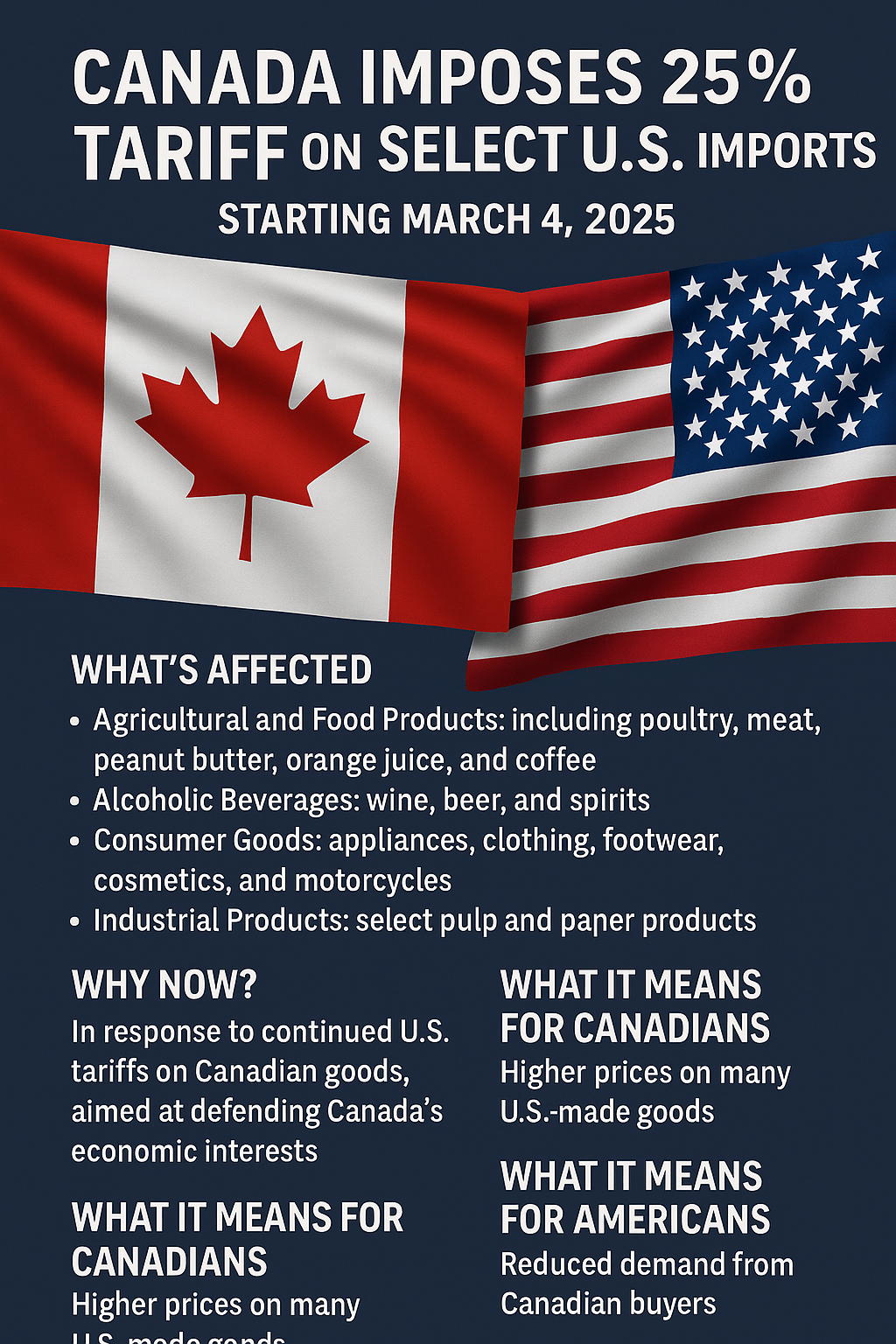
In a significant trade move, the Government of Canada has officially imposed a 25% tariff on a broad range of U.S. imports, effective March 4, 2025. This decision comes in direct response to the United States’ continued tariffs on Canadian goods, and is part of Canada’s effort to defend its economic interests and encourage the U.S. to reverse what it has called “unjustified” trade actions.
The tariffs cover approximately $30 billion worth of goods and apply exclusively to products that qualify as originating from the United States under Canadian trade rules (specifically, the CUSMA country of origin regulations).
What’s Affected
The list of U.S. goods now subject to the 25% surtax is extensive and touches several sectors:
- Agricultural and Food Products: including poultry, meat, peanut butter, orange juice, and coffee.
- Alcoholic Beverages: wine, beer, and spirits.
- Consumer Goods: appliances, clothing, footwear, cosmetics, and motorcycles.
- Industrial Products: select pulp and paper products.
The complete list of affected items was released by the Department of Finance and can be found on their official site:
🔗 List of products subject to tariffs (PDF)
🔗 Official News Release
Why Now?
This move is part of a broader strategy to counter recent U.S. tariffs, which include a sweeping 25% duty on most Canadian exports—with the exception of energy products, which are currently subject to a 10% tariff. The U.S. has justified these measures by citing economic and security concerns.
Canada, in turn, is using its own trade tools to respond proportionately. In a statement, the Department of Finance emphasized that these countermeasures will remain in effect until the U.S. withdraws its tariffs against Canadian exports.
What It Means for Canadians
For Canadian businesses and consumers, the most immediate impact will likely be higher prices on many U.S.-made goods. Retailers, importers, and manufacturers are being urged to review the new tariff list to assess how their operations or supply chains may be affected.
What It Means for Americans
For American producers and exporters, the new tariffs could lead to reduced demand from Canadian buyers—a significant concern given Canada is the United States’ second-largest trading partner. Sectors like agriculture, food and beverage, and consumer goods may be hit hardest as Canadian importers look for alternative suppliers in other countries.
Small and medium-sized U.S. businesses that rely heavily on exports to Canada could also feel the pinch. Reduced competitiveness, slower sales, and supply chain disruptions are all possibilities. There may also be pressure on the U.S. government from domestic industries to ease its own tariffs on Canadian goods in hopes of a negotiated resolution.