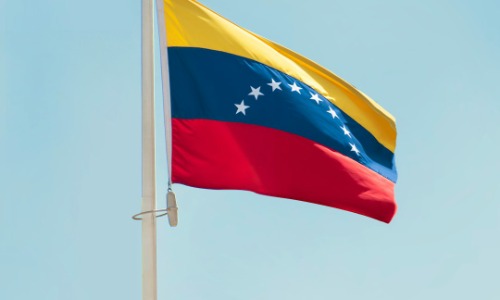
In a development that has reshaped U.S.–Latin America relations and reverberated through global diplomatic circles, the United States has carried out a dramatic military operation in Venezuela, resulting in the capture of Venezuelan President Nicolás Maduro and his wife, Cilia Flores. The operation, announced by U.S. President Donald J. Trump, marked an extraordinary escalation in tensions that have been building for months.
Operation Absolute Resolve
In the early hours of January 3, U.S. forces launched Operation Absolute Resolve, a coordinated military and law enforcement mission targeting key locations in Caracas and other parts of northern Venezuela. According to official and independent reports, the operation involved extensive airstrikes, special operations forces, and logistical support from multiple branches of the U.S. Armed Forces and intelligence agencies. Maduro and his wife were apprehended during the strike and quickly transported out of Venezuelan territory.
President Trump hailed the mission as a “successful capture,” citing longstanding U.S. criminal indictments against Maduro for narcotics trafficking and narco-terrorism. Trump also stated that the United States would temporarily oversee Venezuelan governance to facilitate what he described as a “safe, proper, and judicious transition.” (Reuters)
Legal Proceedings and Maduro’s Court Appearance
Following his capture, Maduro and Flores were flown to New York, where they were arraigned in a federal court on multiple serious charges, including drug trafficking conspiracy and narco-terrorism. In his first U.S. court appearance, Maduro pleaded not guilty and characterized his detention as a “kidnapping,” asserting that he remains the legitimate president of Venezuela. (People.com)
Legal experts and observers note that this marks an unprecedented prosecution of a sitting foreign head of state on U.S. soil. Maduro’s legal team has signaled plans to challenge the operation’s legality, including issues related to sovereign immunity and the manner of his capture. (Reuters)
International Reaction and Legal Controversy
The operation has triggered a strong and largely adverse international reaction. At an emergency meeting of the United Nations Security Council, numerous member states condemned the U.S. action as a violation of international law and Venezuelan sovereignty. Countries such as Brazil, China, Russia, and South Africa branded the operation a “crime of aggression.” At the same time, the U.N. Secretary-General expressed concerns about the precedent it sets for global norms governing the use of force. (The Guardian)
Legal scholars and international relations experts emphasize that unilateral military interventions without U.N. Security Council authorization or clear self-defense justification are generally prohibited under the U.N. Charter. Critics argue the U.S. effort blurs lines between law enforcement and military aggression, raising questions about legitimacy and long-term geopolitical consequences. (Reuters)
Venezuela’s Political Landscape Post-Capture
In Caracas, the Venezuelan Supreme Tribunal of Justice moved swiftly in the aftermath of Maduro’s removal. Vice President Delcy Rodríguez was sworn in as interim president under constitutional succession provisions. Initially denouncing Maduro’s capture as illegitimate, Rodríguez has since indicated a willingness to engage with U.S. officials regarding Venezuela’s future. (Reuters)
The political environment within Venezuela remains fragile. Reports indicate a tense calm in Caracas, with a notable reduction in civilian activity as the government consolidates its interim authority and seeks stability following the operational shock. (CBS News)
Regional and Global Ramifications
Analysts suggest the repercussions of this operation will extend far beyond Venezuela’s borders. In addition to disrupting traditional diplomatic relations in Latin America, the U.S. action has reignited debates over sovereignty, interventionism, and the role of military force in pursuing transnational criminal justice objectives. Allied nations have offered mixed responses, with some expressing cautious support and others outright condemnation. (Axios)
The capture of President Maduro stands as one of the most consequential foreign policy actions undertaken by the United States in the Western Hemisphere in decades, drawing comparisons to past interventions such as the 1989 invasion of Panama. Whether this event marks a new chapter in U.S. engagement in the region will depend on unfolding legal proceedings, diplomatic negotiations, and political developments both inside Venezuela and internationally.